
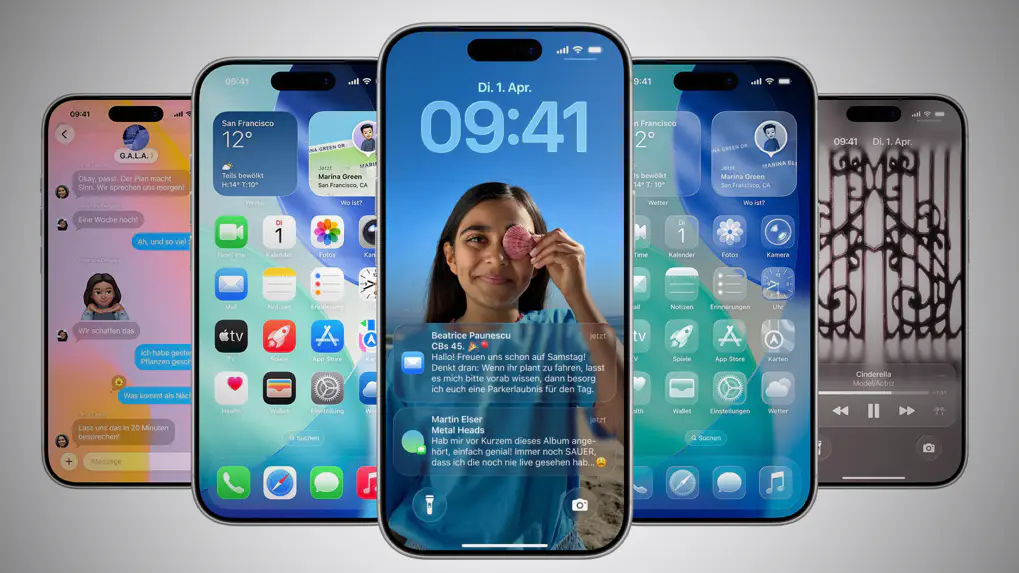
Apple has officially released iOS 27, bringing a major new wave of software features to the iPhone. The update puts Apple’s long-promised AI ambitions at the center of the experience, with a significantly more capable Siri, deeper Apple Intelligence integration, new ways to interact with apps, and a redesigned iPhone experience. For millions of iPhone users in the US and UK, iOS 27 is more than another annual software update — it is Apple’s biggest step yet toward turning the iPhone into an AI-powered personal assistant.
Why It Matters
Apple’s iOS updates have traditionally focused on improving the existing iPhone experience with new apps, interface changes and useful quality-of-life features.
iOS 27 changes the emphasis.
Artificial intelligence is now much more deeply integrated into Apple’s software strategy, putting Siri and Apple Intelligence at the center of the update. Instead of simply answering basic questions or performing isolated commands, Apple’s upgraded AI experience is designed to understand more context and help users complete tasks across their apps and information.
That puts Apple in a much more direct competition with AI assistants from Google, OpenAI and other technology companies.
For iPhone users, the significance is straightforward: the smartphone is becoming less about opening individual apps and more about asking the device to understand what you need and help you accomplish it.
The Details
The biggest headline feature in iOS 27 is the next generation of Siri.
Apple has been working toward a more conversational and context-aware Siri for years, and iOS 27 represents a major step toward that vision. The assistant can understand more natural requests and is designed to work with information across the user’s Apple ecosystem.
Instead of treating every request as a completely separate interaction, Siri can use context from previous parts of a conversation to better understand what the user is asking.
That makes interactions feel more like communicating with an AI assistant rather than issuing commands to a traditional voice assistant.
Apple Intelligence is also expanding across the operating system.
Users can access AI-powered writing assistance, image-generation capabilities and tools for understanding information, while Apple continues to emphasize privacy and on-device processing where possible.
The update also brings AI deeper into everyday iPhone activities.
Messages, Mail, Photos and other core Apple applications can benefit from Apple’s intelligence features, reducing the amount of manual work users need to perform.
For example, AI can help summarize information, rewrite text, identify relevant details and make information easier to process.
That matters because Apple’s strategy is different from simply adding a chatbot to the iPhone.
The company is attempting to make AI part of the operating system itself.
Siri Is Apple’s Biggest AI Test
The most important part of iOS 27 may be whether users actually start relying on Siri again.
For years, Siri has lagged behind competing AI assistants in areas such as conversational reasoning, contextual understanding and complex requests.
Apple’s upgraded Siri is intended to address exactly those weaknesses.
The company wants Siri to understand what is happening on the user’s screen, recognize context from previous interactions and eventually take actions across applications.
That could fundamentally change how people use the iPhone.
Imagine asking Siri to find a message from someone, identify the information inside it, add an event to your calendar and then remind you about it later.
The goal isn’t simply to provide an answer.
The goal is to complete the task.
That is the same direction being pursued by the broader AI-agent industry, where AI systems increasingly move from generating information to taking actions on behalf of users.
Apple Is Putting AI Everywhere
Another important change is that Apple is no longer treating AI as a standalone feature.
Instead, Apple Intelligence is becoming a layer across the company’s ecosystem.
That includes the iPhone, iPad and Mac, creating a consistent AI experience across multiple Apple devices.
This could become one of Apple’s biggest advantages over standalone AI applications.
A user might start a task on an iPhone, continue it on a Mac and use Siri or another Apple device to complete it.
The more Apple Intelligence understands the user’s personal information and device ecosystem, the more useful that system can become.
But that also creates Apple’s biggest challenge.
Privacy.
The Privacy Question
Apple has positioned privacy as one of the defining characteristics of its AI strategy.
The company emphasizes on-device processing for many tasks, while more demanding requests can be handled through Apple’s Private Cloud Compute infrastructure.
The idea is to provide powerful AI capabilities without creating a traditional centralized profile of everything users ask their devices to do.
That distinction could become increasingly important as AI assistants become more deeply integrated into people’s personal lives.
An AI assistant that can read messages, understand calendars, search photos and interact with applications potentially has access to an enormous amount of sensitive information.
Apple therefore has to convince users that a more capable Siri does not mean sacrificing the privacy protections that have become a major part of the company’s brand.
What This Means for the iPhone
iOS 27 could mark the beginning of a fundamental change in how people interact with smartphones.
For more than a decade, the dominant iPhone interface has remained largely unchanged:
Open an app.
Tap a button.
Search for information.
Complete the task manually.
AI introduces another possibility:
Tell the phone what you want.
Let the system understand the context.
Allow AI to figure out the steps.
Complete the task.
That shift is bigger than any individual iOS 27 feature.
If Apple can make Siri reliable enough to handle complicated everyday tasks, the home screen and individual applications could become less important over time.
Instead, the AI assistant could become the primary interface.
The Hardware Limitation
There is another important part of the iOS 27 story: not every iPhone will necessarily get every AI feature.
Apple Intelligence requires significant processing power, particularly for more advanced generative AI and on-device models.
That means older iPhones may support iOS 27 itself while missing some of the most advanced Apple Intelligence capabilities.
This is an increasingly important strategy for Apple.
AI could become one of the strongest reasons for consumers to upgrade their iPhones.
Instead of upgrading because the camera is slightly better or the processor is faster, consumers may eventually upgrade because their older iPhone cannot run the newest AI features.
That could become particularly important as Apple prepares its next generation of iPhones and increasingly sophisticated AI systems.
What This Means for Apple’s AI Direction
The real significance of iOS 27 is not any single feature.
It is Apple’s change in direction.
Apple is no longer trying to compete in AI simply by producing a better chatbot.
It is trying to make AI part of the operating system.
That approach could ultimately be more powerful.
Google has Gemini.
OpenAI has ChatGPT.
Microsoft has Copilot.
But Apple controls the operating system, the hardware, the apps and the ecosystem that billions of people already use.
If Apple can make Siri genuinely useful, it doesn’t necessarily need users to download another AI application.
The AI is already sitting inside the device.
What’s Next
The next major test for Apple will be whether users actually adopt the new Siri and Apple Intelligence features in their everyday lives.
The company has spent years promising a smarter Siri, but consumers will judge the technology based on reliability rather than demonstrations.
If Siri can consistently understand context and complete complicated tasks, iOS 27 could become one of the most important software releases in Apple’s recent history.
If it continues to struggle with basic requests, the company risks falling further behind competitors that have moved faster in generative AI.
The stakes are therefore much higher than another annual iOS update.
iOS 27 is effectively Apple’s test of whether it can turn the iPhone into an AI-first device without sacrificing the simplicity, privacy and reliability that made the platform successful in the first place.
FAQ
What is iOS 27?
iOS 27 is Apple’s latest major operating system update for the iPhone. It introduces new Apple Intelligence capabilities, an upgraded Siri experience, interface improvements and additional features across Apple’s core applications.
What is the biggest feature in iOS 27?
The biggest headline is Apple’s next-generation Siri and the deeper integration of Apple Intelligence throughout the iPhone experience.
Is Siri better in iOS 27?
Apple has significantly expanded Siri’s AI capabilities in iOS 27, giving the assistant improved conversational understanding and deeper integration with the iPhone ecosystem. The biggest test will be how reliably those capabilities work in everyday use.
Does every iPhone support Apple Intelligence in iOS 27?
No. Some Apple Intelligence features require newer iPhone hardware with sufficient processing capabilities. An iPhone may support iOS 27 while not supporting every advanced AI feature.
Is iOS 27 worth installing?
For compatible iPhones, iOS 27 is a significant update, particularly for users interested in Apple Intelligence and the new Siri experience. As with any major operating-system update, users should make sure their device is backed up before installing.
Written by [Author Name], Technology & Apple Correspondent.
Related reading:
- iOS 28 Could Be Apple’s Biggest iPhone Software Update in Years — And the 20th-Anniversary iPhone Is the Reason
- Apple Didn’t Launch the iPhone 18 — Here’s Why the iPhone 18 Is Coming Later
- iPhone Duo vs iPhone 18 Pro: Which New iPhone Should You Buy?
- Apple Intelligence Explained: What Apple’s AI Can Actually Do
- Siri AI Is Finally Here — Can Apple Catch Up With ChatGPT and Gemini?